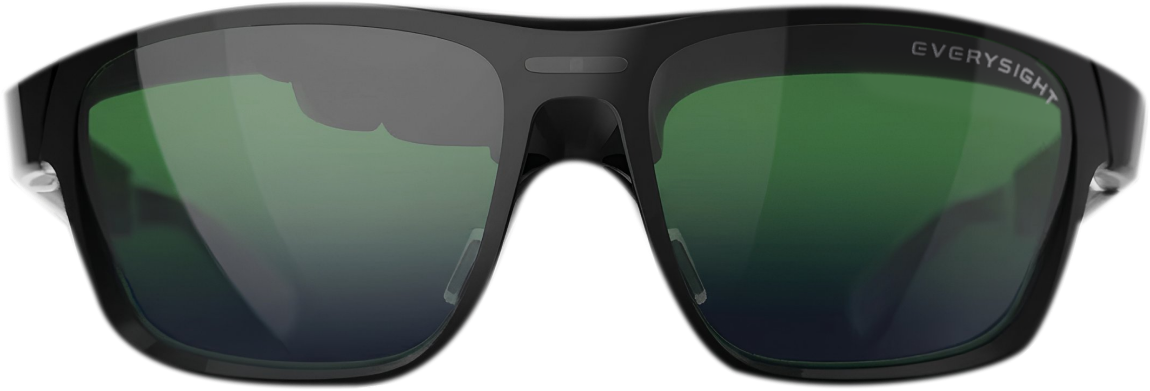
Everysight Maverick AR: Pioneering Next-Gen HUD Experiences for Developers
The landscape of augmented reality (AR) development is, by many accounts, in a dynamic and fragmented state, reminiscent of virtual reality a few years ago. Lacking a single, universally adopted standard, developers navigate a diverse array of devices, each tailored for different use cases – from immersive 6DoF (six degrees of freedom) AR experiences to more subtle, heads-up display (HUD) applications. Amidst this evolving ecosystem, the Best AR Glasses Developer Kits: Maverick, Vuzix, ActiveLook stand out, but Everysight's Maverick AR glasses are carving a unique niche, particularly as a robust ar glasses developer kit for building sophisticated HUD experiences.
Everysight, a company with a strong pedigree in developing high-performance HUD systems for demanding environments like US military fighter jets, brings unparalleled expertise in optical display technology to the consumer and developer market. Their Maverick AR glasses are heralded as a promising contender, potentially being the first all-day use case for the general public. For developers looking to craft intuitive, glanceable information overlays directly into a user's field of view, the Maverick ar glasses developer kit offers a compelling platform.
The Everysight Maverick: A New Paradigm for AR HUDs
What sets the Everysight Maverick apart is its unwavering focus on delivering a lightweight, comfortable, and power-efficient HUD experience designed for extended wear. Unlike bulkier AR headsets aiming for full spatial computing, the Maverick prioritizes displaying critical information directly onto the lens, making it ideal for scenarios where users need essential data without being fully immersed or distracted from their physical surroundings. This design philosophy aligns perfectly with an "all-day" use case, where users might want to check navigation, fitness metrics, or notifications seamlessly throughout their day.
Developers who have had the opportunity to work with the Maverick dev kit describe the experience as impressive. While initial setup can pose some challenges, once configured, the devices perform exceptionally well. The ability to have AI assistance or contextual information appear directly on one's face has been noted as a uniquely useful experience, hinting at the profound potential for personalized, on-the-go assistance. This approach is a clear departure from heavy, camera-laden devices, instead emphasizing immediate, high-quality visual data delivery. It’s about enhancing reality with relevant information, not replacing it.
The vision for many developers includes an all-day AR device that functions like a smartwatch – a "master app" supporting swappable information plugins or "faces" for different contexts. While the Maverick's current design leans towards hardware ready to display information for individual applications, it provides an excellent foundation for developers to build these custom HUD applications from the ground up. Its high-quality, lightweight display is a significant asset in this pursuit.
Deep Dive into the Maverick AR Glasses Developer Kit
The Everysight Maverick ar glasses developer kit is engineered to empower developers by integrating directly into existing applications. The SDK exposes the glasses' capabilities, providing robust APIs for content rendering and control. At its core, the glasses' embedded operating system efficiently processes commands, manages hardware functionalities, and displays information to the user in a timely and contextually relevant manner. This streamlined architecture is crucial for maintaining the lightweight and power-efficient profile that defines the Maverick.
One notable aspect of the Maverick, similar to some other developer-focused AR glasses like ActiveLook and certain Vuzix models, is the absence of an integrated front-facing camera. While this design choice significantly contributes to its lightweight form factor and extended battery life – key elements for all-day wear – it also represents a common point of discussion among developers. For many augmented reality applications, a camera is fundamental for environmental understanding, object recognition, and spatial anchoring of virtual content.
However, this perceived limitation has spurred innovation, fostering a modular development approach. Developers are exploring solutions like small, external BLE cameras that can clip onto standard glasses and wirelessly transmit images to a paired smartphone. The smartphone then handles the heavy computational lifting for computer vision tasks, sending processed information back to the glasses for display. This "mix-and-match" strategy offers adaptability, allowing developers to tailor solutions to specific needs without compromising the inherent advantages of lightweight HUD glasses.
Navigating the AR Glasses Developer Kit Landscape: Maverick in Context
When evaluating ar glasses developer kit options, the Everysight Maverick stands alongside other viable contenders, each with its own strengths. Vuzix, for instance, offers diverse solutions: the Blade 2, a standalone Android device featuring a front camera for more comprehensive AR experiences, and the Z100, a BLE-only device without a camera, akin to the Maverick and ActiveLook. ActiveLook Enterprise is another highly developer-friendly option, known for its extremely lightweight design, low-level BLE protocol, and open API/SDKs without licensing fees, though its display is a grayscale 304x256 pixel panel.
The BLE (Bluetooth Low Energy) display approach, embraced by the Maverick, ActiveLook, and Vuzix Z100, is gaining traction due to its inherent advantages: significantly lower power consumption, lighter form factors, and the ability to seamlessly pair with smartphones for application processing and connectivity. This offloads the heavy computational burden from the glasses to the more powerful and ubiquitous smartphone, enabling glasses to focus purely on display and interaction.
For scenarios demanding camera input, the Modular AR Development: Strategies for Camera-Less & BLE Glasses offers a compelling pathway. The concept of combining lightweight HUD glasses with separate, clip-on BLE camera and audio components provides flexibility. Imagine a small, battery-powered camera like the XAIO Esp32 s3, capable of transmitting low-frame-rate images wirelessly to a phone, which then processes the visuals and feeds relevant AR overlays back to the Maverick. This modularity allows developers to build highly customized solutions, adapting to various preferences and usage scenarios without being locked into a single hardware configuration.
Practical Considerations for Maverick Developers
- Embrace the HUD Philosophy: The Maverick excels at delivering timely, glanceable information. Developers should design apps that leverage this strength, focusing on clarity, conciseness, and minimal distraction. Think of critical alerts, navigation cues, fitness data, or subtle notifications.
- Leverage Smartphone Power: For complex data processing, AI, or even camera-based computer vision, pair the Maverick with a smartphone. The glasses act as the display, and the phone as the processing powerhouse, optimizing battery life and performance on both ends.
- Explore Modular Add-ons: If camera or advanced audio functionality is crucial for your application, actively investigate third-party BLE accessories. The ecosystem for such modular components is growing, offering innovative ways to extend the Maverick's capabilities.
- Focus on User Experience (UX): Given the all-day use potential, UX is paramount. Ensure interfaces are intuitive, comfortable, and non-fatiguing. Consider different lighting conditions and how your content will appear.
- Tap into Everysight's Heritage: Everysight's background in military-grade HUDs means the Maverick's display quality and reliability are likely top-tier. Developers can trust the hardware to deliver crisp, clear visuals, allowing them to concentrate on the application logic and content.
Conclusion
The Everysight Maverick AR glasses stand as a significant contender in the evolving world of augmented reality. As a powerful ar glasses developer kit, it offers a unique blend of lightweight design, high-quality HUD display capabilities, and the promise of true all-day wearability. While the AR landscape continues its journey towards standardization, devices like the Maverick, with their clear focus on enhancing reality through subtle, contextual information, are paving the way for practical, consumer-friendly AR. Developers who understand its strengths – particularly its excellent display and BLE-centric architecture – and are willing to embrace modular development strategies for expanded functionality, will find the Maverick an invaluable tool for building the next generation of intuitive, augmented reality applications and experiences.